Narrated explainer videos from a YAML file
Turns a written plainmotion.yaml project into a narrated, deterministic
MP4 — locally, with no network at render time and nothing to sign up for.
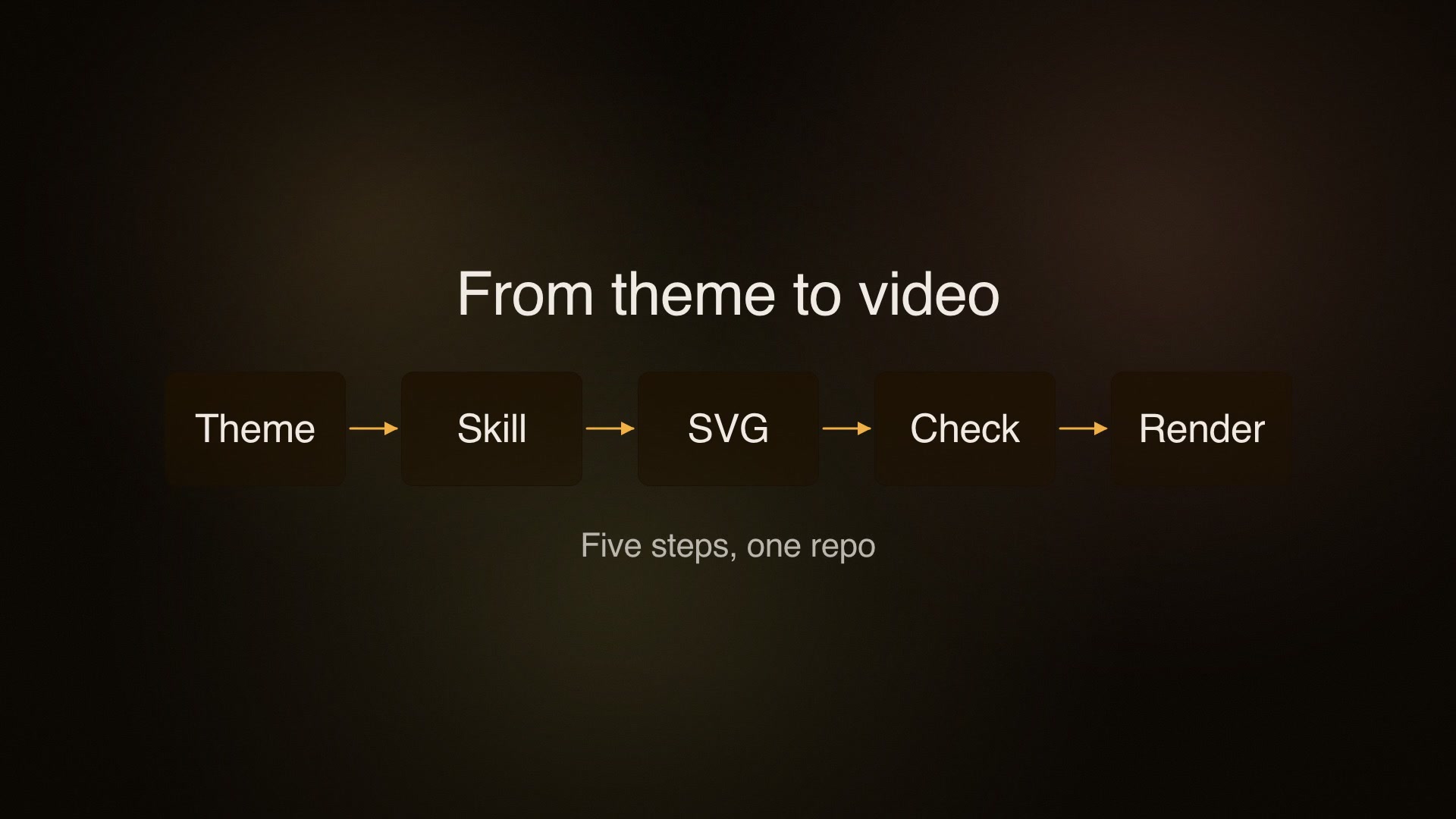
This video was generated from a text file. The poster frame above is product output too.
How it works
Write the script
Scenes, narration text and cues as one plainmotion.yaml file. No
timeline, no frame counts.
The narration is the clock
PlainMotion synthesises the narration locally and measures exactly how long each word takes to say — scene durations and cue timings come from that measurement.
Render, deterministically
plainmotion render produces one H.264 MP4, SRT/VTT caption sidecars,
and a frozen render-plan.json — a re-render cannot disagree with the
original.
The opening scene, as the author wrote it
scenes:
  # Act 1 — the claim.
  - id: hook
    type: title
    duration: auto
    narration:
      text: >
        This video was generated from a text file. No timeline. No screen
        recording. Just a script. Here is how.
    visual:
      headline: Generated from a text file
      subtitle: Every frame, every word — one file
    cues:
      - { atPhrase: "This video was generated", action: reveal, target: headline }
      - { atPhrase: "Just a script", action: reveal, target: subtitle }
      - { atPhrase: "Just a script", action: emphasize, target: headline }
— examples/plainmotion.yaml, the script behind PlainMotion's own demo video. Eight more scenes follow.
Why this one
Local and offline
No account, no API key, no telemetry. After two one-time downloads, rendering needs no network at all.
Deterministic
Every render emits a frozen render plan — the literal record of layout, timings and encoder arguments.
Agent-native
Every command speaks --json, and a bundled Claude Code skill knows
the whole schema. You direct; the agent writes the yaml.
Free to use
The full engine is free — every render ends with a short "Made with PlainMotion" credit. One licence key removes it, permanently.
Pricing
- The full engine, every scene type
- Deterministic renders, captions, music bed
- "Made with PlainMotion" closing credit
- Everything in Free
- No closing credit, on this machine, forever
- One key also activates Pro in PlainTake